The situation, in brief
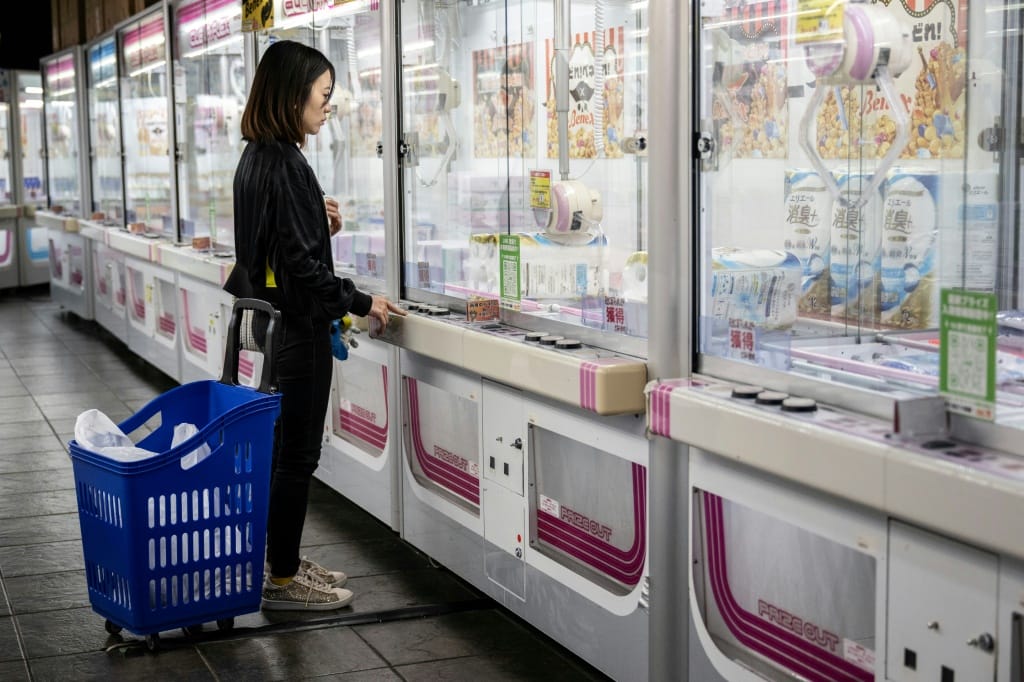
With one eye on her baby in a pushchair, Minae Kamata operates an arcade machine in a Tokyo suburb, manipulating a claw to grab not a stuffed toy but a pack of toilet paper. As inflation weighs on Japanese households, huge arcades on the outskirts of major cities are installing claw machines…
With one eye on her baby in a pushchair, Minae Kamata operates an arcade machine in a Tokyo suburb, manipulating a claw to grab not a stuffed toy but a pack of toilet paper.
As inflation weighs on Japanese households, huge arcades on the outskirts of major cities are installing claw machines filled with eggs, rice, laundry detergent and other necessities.
The “shop-and-play destinations” merge essential buying with entertainment so that families do not feel a choice between bringing home the basics and treating themselves to a day out.
Kamata, a 25-year-old housewife, told AFP she won her prize after only two tries, at 100 yen ($0.64) per attempt.
“If you’re a bit lucky, it’s the same as buying at a discount,” she told AFP.
Experts say the trend is a response to Japan’s prolonged wave of inflation, with prices having outpaced wage growth for years.
“Spending on food and everyday products has been continuously declining for five years because these have become targets for budget cuts,” said Naoko Kuga, a consumer behaviour specialist at the NLI Research Institute.
So “retailers are trying to make purchasing fun to encourage buying” and ease a sense of guilt, she added.
Claw machines were already booming in Japan before the inflation wave.
The “prize game” market more than doubled in 10 years to reach 417.7 billion yen ($2.7 billion) in 2024, and now accounts for nearly 70 percent of arcade revenues, according to the Japan Amusement Industry Association.
In recent years, families in search of everyday items have become a larger part of their clientele.
In Kawasaki, on the southern outskirts of Tokyo, hundreds of machines at a venue operated by the specialist chain Benex are filled with bottles of soda, bags of sweets, and detergent.
“When a family spends 10,000 yen on a day of karaoke or bowling, they have fun and that’s it. But at Benex, you go home with toilet paper, bottles, and toys,” said Teruaki Tsuchiya, an executive at Tisco, which operates Benex.
“With inflation, parents are choosing the most cost-effective entertainment option.”
The company, which has five locations in Greater Tokyo and claims over one million visitors a year, scrapped its video games and token machines last year to refocus on claw machines.
It says revenue through household product sales has increased 2.6-fold in two years.
Tsuchiya said the model is similar to chains like Costco or Ikea: large stores on the outskirts of cities, where land is cheaper and loyal customers come by car and spend relatively more.
Japan’s inflation rate has hovered near the central bank’s two-percent target in recent months — a modest figure for many developed economies but a shock for a country used to decades of stagnant or falling prices.
After “two or three hours” on the machines, Chiaki Sugai, a 56-year-old sushi restaurant employee, pushes a huge cart filled with trophies which cost her nearly 8,000 yen.
“Before, I used to buy a lot of snacks at convenience stores, but now I grab them here,” she said.
Forty-nine-year-old Sachiko Iyokawa also appeared satisfied with her winnings: two boxes of premium eggs, cheaper than in supermarkets.
“Normally I’m careful, but here I treat myself a little,” she said.
Large retailers are jumping on the bandwagon.
Aeon Fantasy, an amusements subsidiary of the sprawling Aeon Group, opened its first area dedicated to food and household prizes targeting mothers in October 2025.
It now has seven such spaces and plans to open around 60 by 2030.
“At a time when consumers are highly sensitive to cost, we offer an experience that combines fun with the thrill of getting a good deal,” Yuya Shiozawa, a manager at Aeon Fantasy, told AFP.
“We see, for example, customers who, after winning vegetables, go to the supermarket next door to buy ingredients to complete their dinner.”
According to Kuga, the trend should outlast the current period of inflation, as brick-and-mortar retailers seek new reasons to attract customers who are increasingly buying household products via Amazon subscriptions.
She predicted that “stores will multiply initiatives to bring customers in, whether with claw machines or in other forms”. — Agence France Presse