The situation, in brief
Every collapsed structure points back to the choices made long before the ground began to shake. When the magnitude 6.9 earthquake shook in Northern Cebu on September 30, communities watched as schools and churches crumbled, roads split apart, and sinkholes opened like traps waiting for the right…
Every collapsed structure points back to the choices made long before the ground began to shake.
When the magnitude 6.9 earthquake shook in Northern Cebu on September 30, communities watched as schools and churches crumbled, roads split apart, and sinkholes opened like traps waiting for the right trigger.
By Science Secretary Renato Solidum Jr.’s measure, a quake of that magnitude should not have leveled that many houses and buildings, at least not in a society where the rules are followed.
“Ang ating National Building Code, kapag sinunod ang disenyo, materyales na ginamit, at pulido ang pagkagawa, walang shortcut, tiyak po na hindi magco-collapse o walang significant na sira ang ating mga bahay at gusali,” the Philippines’ science chief said on DZRH News’ Special on Saturday on October 4.
The National Building Code of the Philippines, established under Presidential Decree No. 1096, serves as the country’s primary law prescribing minimum standards for the design, construction, occupancy, and maintenance of all buildings and structures.
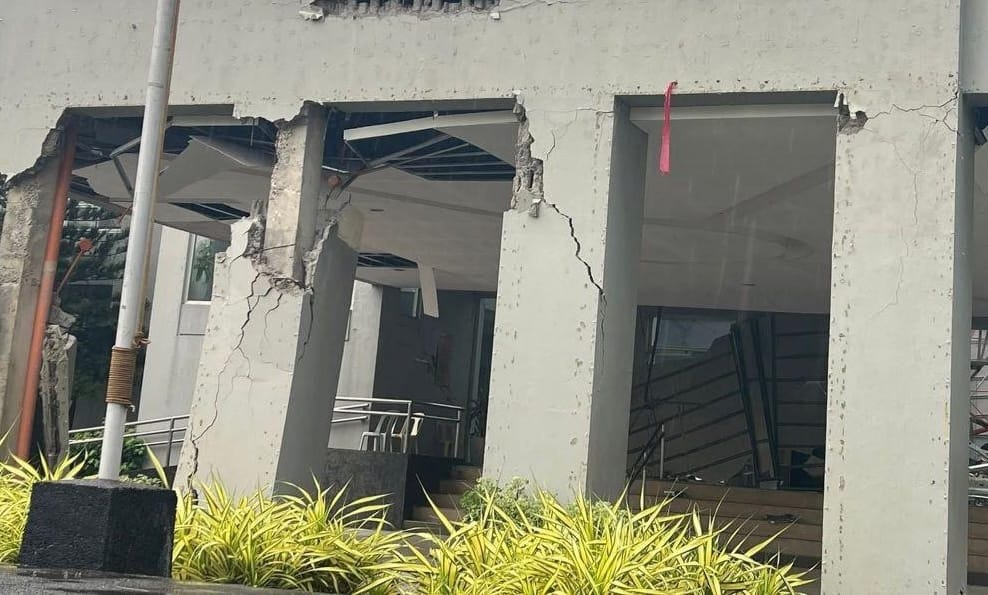
On social media, netizens zeroed in on viral photos of the heavily damaged Bogo City Hall after the magnitude 6.7 earthquake. It wasn’t the only building called out, but as a government facility, its collapse struck a particularly raw nerve.
One comment captured the anger: “Natuklasan ang ginawa ng contractor kasabwat ng pulpolitiko. Ang mga substandard material ginamit sa kanilang City Hall. Yung poste na akala mo ang laki, ampaw pala ang laman—binalot lang ng palitada ng semento.”
About 34 classrooms also collapsed and more than 200 others suffered damage. These were government-funded projects, drawn up with blueprints and cleared for occupancy. Each failure raised the same suspicion: safety may have been signed away long before the quake.
The roads and sinkholes became another flashpoint. Solidum explained that highways are especially vulnerable because, unlike buildings, they don’t have posts or beams driven deep into the ground. If the base isn’t compacted properly or if drainage is poor, shaking can easily tear the surface apart. He also noted that much of Cebu sits on limestone, where hidden cavities can collapse into sinkholes under stress.
These hazards are well understood. Engineers and building officials are expected to address them through soil testing, reinforcement, and proper site assessments. So when new pavement fractures or sinkholes open beneath roads, were the safeguards actually carried out, or were they bypassed and approved anyway?
Public Works Secretary Vince Dizon has ordered building officials and municipal engineers to carry out a full round of inspections.
“Coordinate with the relevant government agencies and provide any necessary assistance in accordance with their mandate, including expediting the permitting process and releasing the corresponding permits for the necessary works to rectify the damage to the affected buildings/structures,” Dizon’s memorandum read.
In the silence after the quake, the loudest question left standing is whether integrity was ever part of the blueprint.