Thursday, October 29, 2026  ·  Manila
 Breaking News, Special Reports and In-Depth Stories in the Philippines
TSR
World

Himalayas approaching tipping point, millions of livelihoods at stake, report finds

Himalayas approaching tipping point, millions of livelihoods at stake, report finds
Share

The situation, in brief

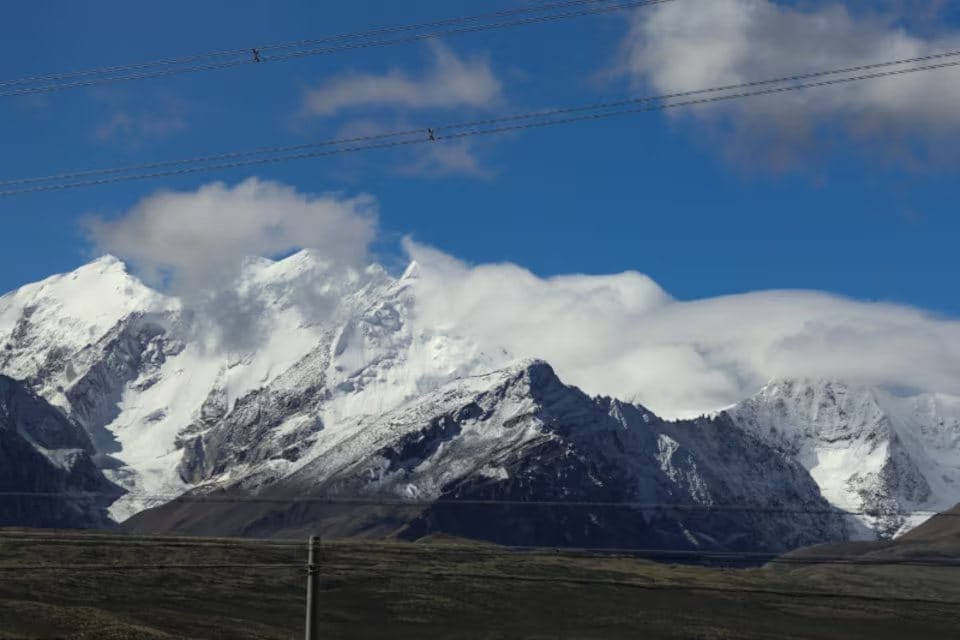
The Himalayas are approaching a tipping point as glaciers melt faster than a decade ago, ​threatening water security as the region approaches “peak water” by mid-century, ‌according to a study released this month. The findings come after the collapse of a Himalayan glacier in late August along the…

The Himalayas are approaching a tipping point as glaciers melt faster than a decade ago, ​threatening water security as the region approaches “peak water” by mid-century, ‌according to a study released this month.

The findings come after the collapse of a Himalayan glacier in late August along the Nepal-Tibet border, which caused cascading landslides and ​flash floods in the valleys below. At least 1,300 people have ​been confirmed dead and more than 5,300 are missing across ⁠Nepal and China’s Tibet region.

As glaciers retreat, they are leaving behind ​unstable glacial lakes held back by little more than loose rock and ​ice, above valleys where millions of people live, the study found.

The study was produced by Systemiq, a sustainability advisory firm, together with the Integrated Mountain Initiative, the International ​Centre for Integrated Mountain Development, and India’s G.B. Pant National Institute ​of Himalayan Environment.

Himalayan glacier mass loss had accelerated in recent decades, while only 21 ‌glaciers ⁠were currently monitored on the ground out of an estimated 40,000 glaciers across the Hindu Kush-Himalaya region, a vast mountain system spanning eight countries from Afghanistan to Myanmar, the study found.

Close to 200 glacial lakes in ​India had been identified ​as high ⁠risk, with 56 classified as “very high risk”, leaving millions exposed downstream.

As the region neared “peak water”, the point when ​river flows stop rising and start declining, it would ​have profound ⁠implications for water security. As the Himalayas underpinned more than 20% of India’s GDP, the region made up a key piece of the country’s national ⁠economic ​infrastructure, upon which hundreds of millions of ​people depended.

Though making up around 18% of India’s land, the Himalayan region accounted for roughly 35% ​of the country’s natural disasters. — Reuters

More on World

See all
Chinese researchers discover 11,742 viruses, including “jumbo viruses” in the ocean depths
World

Chinese researchers discover 11,742 viruses, including “jumbo viruses” in the ocean depths

Far beneath the Pacific Ocean, Chinese researchers have uncovered a largely unknown ecosystem teeming with viruses, including “jumbo viruses.” In a landmark study published in Nature Communications, marine scientists mapped the viral diversity of the Clarion-Clipperton Zone (CCZ), a…

Grabbing a bargain: Japan’s claw machines cash in on inflation
World

Grabbing a bargain: Japan’s claw machines cash in on inflation

With one eye on her baby in a pushchair, Minae Kamata operates an arcade machine in a Tokyo suburb, manipulating a claw to grab not a stuffed toy but a pack of toilet paper. As inflation weighs on Japanese households, huge arcades on the outskirts of major cities are installing claw machines…

World falling ‘dangerously short’ on climate action: UN chief
World

World falling ‘dangerously short’ on climate action: UN chief

Global commitments to cut planet-heating emissions are falling far short of the Paris climate goals and put the world on course for 2.6C warming this century, the UN warned Wednesday. The report by the United Nations Environment Programme (UNEP) lays bare the chasm between rhetoric and action when…

Study finds buko juice effective for hydrating heat-exposed workers
World

Study finds buko juice effective for hydrating heat-exposed workers

With the strong El Niño phenomenon expected to bring higher temperatures in the coming months, countries are preparing measures to protect their populations from extreme heat. In workplaces where high temperatures threaten workers’ health and productivity, a readily available beverage may help…

Free newsletter

The Morning SitRep

The day’s most important stories in the Philippines and the world, in one five-minute read. Delivered at 6 AM, Monday to Saturday.

Breaking alerts Special reports first No spam
Check your inbox — we’ve sent a link to confirm your subscription.Something went wrong. Please try again in a moment. By subscribing you agree to TSR’s privacy policy.