
Thursday, October 29, 2026  ·  Manila
 Breaking News, Special Reports and In-Depth Stories in the Philippines
TSR
World

Less homework, more in-class writing: How teachers are changing learning strategies to combat AI

Less homework, more in-class writing: How teachers are changing learning strategies to combat AI
Share

The situation, in brief

With the rise of artificial intelligence, educators worldwide are developing new strategies to lessen students’ reliance on the technology. In a New York Times article, many teachers said they are shifting toward in-class writing activities and assigning less homework because it has “become so…

With the rise of artificial intelligence, educators worldwide are developing new strategies to lessen students’ reliance on the technology.

In a New York Times article, many teachers said they are shifting toward in-class writing activities and assigning less homework because it has “become so difficult to police for integrity.”

In-class writing, which encourages students to adopt “analog” learning through pen and paper, is emerging as a new approach to prevent the misuse of A.I.

The article said teachers are requiring students to complete writing activities in the classroom, where they can be observed and supervised.

While educators acknowledged that A.I. tools such as ChatGPT and Claude provide convenience for students, they also raised concerns about whether students are genuinely learning.

Recent studies have shown that excessive reliance on A.I. may weaken students’ critical thinking and problem-solving skills.

As a result, take-home assignments are evolving, with more teachers requiring personal reflections and insights from students.

The New York Times interviewed nearly 400 college and high school educators about how generative A.I. has changed writing instruction.

Teachers said teaching writing has become more challenging, with some noting that A.I. has become a better writer than many students.

In the United States, citing a survey by think tank RAND, the report said A.I. use has become common among students. It found that the percentage of middle school, high school, and college students who regularly used A.I. rose from 48% to 62% between May and December 2025.

The report added that schools in the United States are navigating A.I. use without clear guidance from school administrators or policymakers.

Students, meanwhile, said they also want guidance from adults on how to use A.I. ethically and productively.

More on World

See all
Chinese researchers discover 11,742 viruses, including “jumbo viruses” in the ocean depths
World

Chinese researchers discover 11,742 viruses, including “jumbo viruses” in the ocean depths

Far beneath the Pacific Ocean, Chinese researchers have uncovered a largely unknown ecosystem teeming with viruses, including “jumbo viruses.” In a landmark study published in Nature Communications, marine scientists mapped the viral diversity of the Clarion-Clipperton Zone (CCZ), a…

Grabbing a bargain: Japan’s claw machines cash in on inflation
World

Grabbing a bargain: Japan’s claw machines cash in on inflation

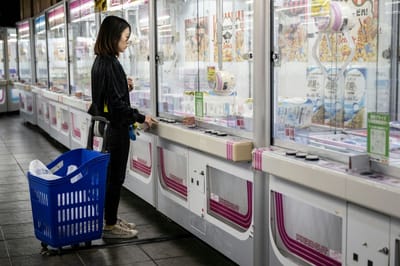
With one eye on her baby in a pushchair, Minae Kamata operates an arcade machine in a Tokyo suburb, manipulating a claw to grab not a stuffed toy but a pack of toilet paper. As inflation weighs on Japanese households, huge arcades on the outskirts of major cities are installing claw machines…

World falling ‘dangerously short’ on climate action: UN chief
World

World falling ‘dangerously short’ on climate action: UN chief

Global commitments to cut planet-heating emissions are falling far short of the Paris climate goals and put the world on course for 2.6C warming this century, the UN warned Wednesday. The report by the United Nations Environment Programme (UNEP) lays bare the chasm between rhetoric and action when…

Study finds buko juice effective for hydrating heat-exposed workers
World

Study finds buko juice effective for hydrating heat-exposed workers

With the strong El Niño phenomenon expected to bring higher temperatures in the coming months, countries are preparing measures to protect their populations from extreme heat. In workplaces where high temperatures threaten workers’ health and productivity, a readily available beverage may help…

Free newsletter

The Morning SitRep

The day’s most important stories in the Philippines and the world, in one five-minute read. Delivered at 6 AM, Monday to Saturday.

Breaking alerts Special reports first No spam
Check your inbox — we’ve sent a link to confirm your subscription.Something went wrong. Please try again in a moment. By subscribing you agree to TSR’s privacy policy.