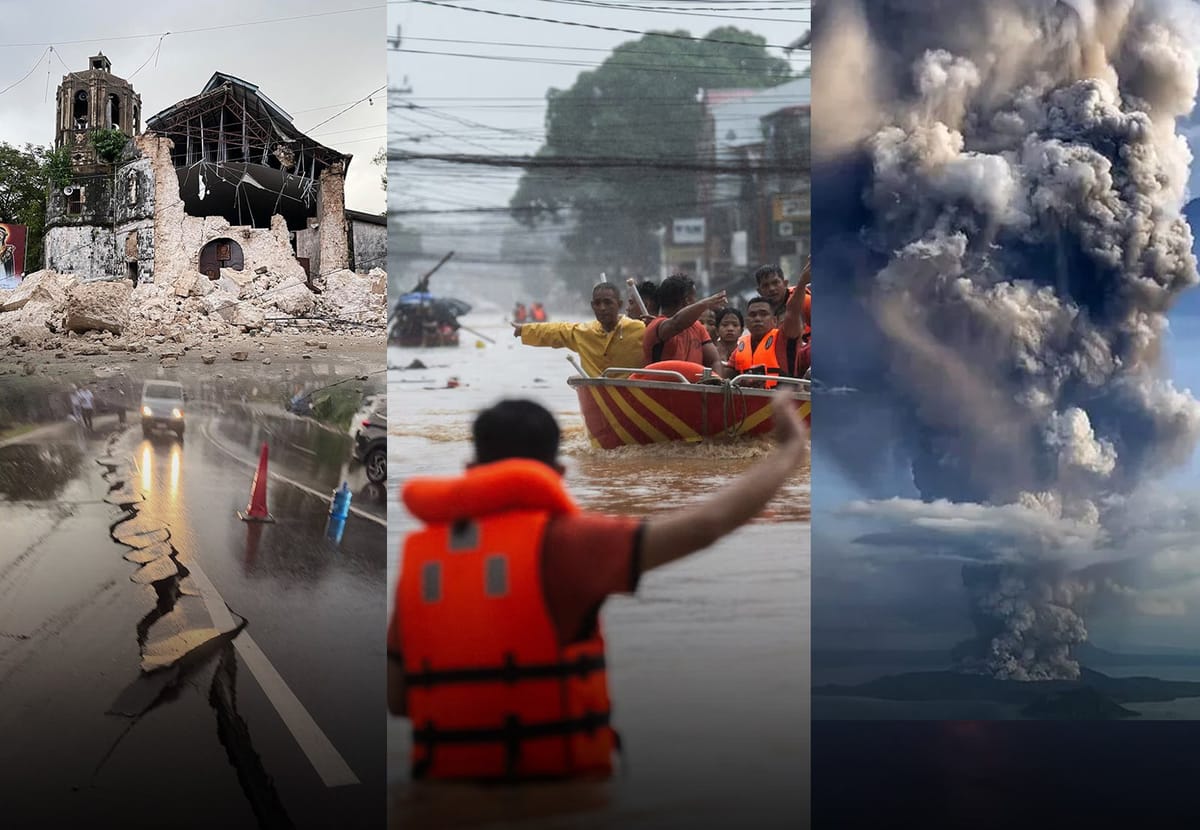
The situation, in brief
The Philippines has once again been ranked the most disaster-prone country in the world, topping the 2025 World Risk Index for the 21st consecutive year. According to the report released by Germany’s Bündnis Entwicklung Hilft and Ruhr University Bochum, the Philippines scored 46.56 — a ‘very high…
The Philippines has once again been ranked the most disaster-prone country in the world, topping the 2025 World Risk Index for the 21st consecutive year.
According to the report released by Germany’s Bündnis Entwicklung Hilft and Ruhr University Bochum, the Philippines scored 46.56 — a ‘very high risk’ rating unchanged from last year. It ranked first among 193 countries.
The countries that followed were mostly in Asia: India (40.73), Indonesia (39.80), Colombia (39.26), Mexico (38.96), Myanmar (36.91), Mozambique (34.39), Russian Federation (31.22), China (30.62), Pakistan (26.82), Bangladesh (26.71), Papua New Guinea (26.51), Vietnam (25.92), Peru (25.81), and Somalia (24.89).
The report described the Philippines as “a country characterized by high geographic fragmentation and high exposure to weather-related extremes.” It noted that while the country is vulnerable to a wide range of hazards, river and coastal flooding remain among its most significant threats.
In the World Map Flood Risk rankings, the Philippines placed 9th globally with a “very high” score of 50.05, tied with Sudan. Myanmar topped the list, followed by Bangladesh, Pakistan, India, Iraq, Somalia, Egypt, and Mozambique.
Locally, the report identified the Philippine provinces most at risk from river and coastal flooding: Cagayan (88.10), Agusan del Norte (87.51), Pangasinan (85.19), Pampanga (83.49), Maguindanao (82.94), Metropolitan Manila (81.12), Camarines Sur (75.77), Misamis Oriental (73.66), Camarines Norte (72.69), and Isabela (71.23).
By contrast, provinces such as Marinduque, Laguna, Batanes, and Sarangani were assessed to have lower risks due to the absence of large river systems, despite their coastal locations.
The report also highlighted how infrastructure and planning play critical roles in risk management. Metro Manila, for example, continues to experience worsening flooding due to a “high degree of soil sealing,” which causes flash floods during heavy rainfall.
In contrast, the study cited parts of Metro Manila and Laguna as examples of how urban planning, sewer systems, and retention areas can help reduce risks.
The release of the World Risk Report comes amid widespread public outrage over alleged anomalies in flood control projects. The Department of Public Works and Highways (DPWH) has admitted that losses from irregular flood control initiatives may have reached trillions of pesos.
“Flood risks are increasing due to climate change and human interference with natural systems. Inadequate urbanization and destroyed ecosystems heighten vulnerability, especially in developing regions,” the report warned.