Thursday, October 29, 2026  ·  Manila
 Breaking News, Special Reports and In-Depth Stories in the Philippines
TSR
Nation

Plastic on the plate: Ateneo study finds microplastics contaminating salt, sugar, rice, and fish sauce

Plastic on the plate: Ateneo study finds microplastics contaminating salt, sugar, rice, and fish sauce
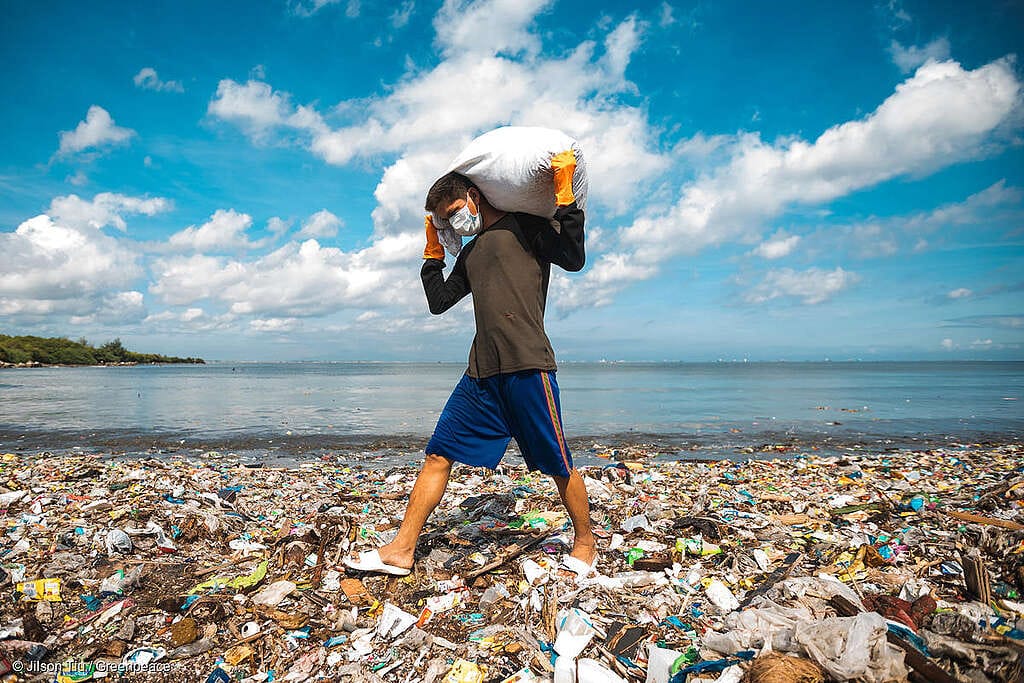
Greenpeace and members of the #breakfreefromplastic movement continue its beach cleanup and brand audit in Freedom Island, Parañaque City. The activity aims to name the companies most responsible for the plastic pollution in our beaches.
Share

The situation, in brief

From land to sea and back to the dining table, plastic pollution has made its way into the Filipino kitchen. A study by researchers from Ateneo de Manila University, published in the Journal of Food Science and Technology, found that microplastics—tiny plastic fragments measuring between 1…

From land to sea and back to the dining table, plastic pollution has made its way into the Filipino kitchen.

A study by researchers from Ateneo de Manila University, published in the Journal of Food Science and Technology, found that microplastics—tiny plastic fragments measuring between 1 micrometer and 5 millimeters—are present in some of the country’s most common staple food products.

The research team, led by Emilyn Espiritu, along with Jiena Lynne Pauco, Renz Bareo, and Edwin Enriquez from the Chemistry and Environmental Science departments, analyzed food items purchased from local wet markets and supermarkets.

Using high-precision Raman microspectroscopy, the team isolated, counted, and identified the chemical composition of microplastics found in staple items such as sea salt, white sugar, brown sugar, rice, and fish sauce (patis).

Results showed that sea salt contained the highest concentration, with 471 microplastic particles per kilogram. This was followed by brown sugar with 67 particles, white sugar with 20, cooked rice with 5, and fish sauce with 3 particles per liter.

Researchers identified manufacturing and processing equipment—including plastic packaging—as the primary sources of contamination.

The presence of polyvinyl chloride (PVC) in sea salt suggests that contamination does not come solely from polluted seawater. Instead, researchers said PVC is likely introduced during manufacturing and refining, where PVC pipes, sheets, and processing tools are commonly used.

Meanwhile, microplastics found in sugar, rice, and fish products were primarily composed of polyethylene terephthalate (PET) and PVC, materials commonly used in food packaging.

The research team emphasized that the findings are not meant to cause alarm, but to inform policy and industry practices.

They recommended that manufacturers—particularly in salt production—limit the use of PVC materials in processing facilities. For other food products, the researchers urged companies to explore non-plastic packaging alternatives to help protect the food supply. — Photo from Greenpeace


More on Nation

See all
Marcos’ net satisfaction ratings drops to ‘poor’ in latest SWS survey
Nation

Marcos’ net satisfaction ratings drops to ‘poor’ in latest SWS survey

President Ferdinand Marcos Jr.’s net satisfaction rating fell to “poor” from “neutral” in the third-quarter survey of the Social Weather Stations (SWS). Marcos’ net satisfaction rating dropped to -11 in September 2026 from -7 in June, according to the survey. The SWS said 35% of adult Filipinos…

Magellan may have reached the Philippines because of El Niño — without knowing it: study
Nation

Magellan may have reached the Philippines because of El Niño — without knowing it: study

Portuguese explorer Ferdinand Magellan may have reached the Philippines in 1521 because of El Niño, without him or his fellow voyagers knowing it. A 2021 study by Dr. Scott Fitzpatrick of North Carolina State University and Dr. Richard Callaghan of the University of Calgary examined Magellan’s…

More than one teaspoon of salt increases risk of heart diseases, stroke — WHO
Nation

More than one teaspoon of salt increases risk of heart diseases, stroke — WHO

Cardiovascular diseases remain the world’s leading cause of death—not only in the Philippines—the World Health Organization (WHO) said. According to the WHO, cardiovascular diseases claim an estimated 17.9 million lives each year, with excessive salt intake identified as one of the key…

‘Very strong’ El Niño may emerge by October, PAGASA warns: ‘This should be taken seriously’
Nation

‘Very strong’ El Niño may emerge by October, PAGASA warns: ‘This should be taken seriously’

Reduced rainfall may be experienced in the coming months as the El Niño phenomenon continues to rapidly strengthen and may persist until the first half of 2027, according to the PAGASA. Ana Solis, chief of PAGASA’s Climate Impact Assessment and Prediction Section, said warming ocean temperatures…

Free newsletter

The Morning SitRep

The day’s most important stories in the Philippines and the world, in one five-minute read. Delivered at 6 AM, Monday to Saturday.

Breaking alerts Special reports first No spam
Check your inbox — we’ve sent a link to confirm your subscription.Something went wrong. Please try again in a moment. By subscribing you agree to TSR’s privacy policy.