Thursday, October 29, 2026  ·  Manila
 Breaking News, Special Reports and In-Depth Stories in the Philippines
TSR
Nation

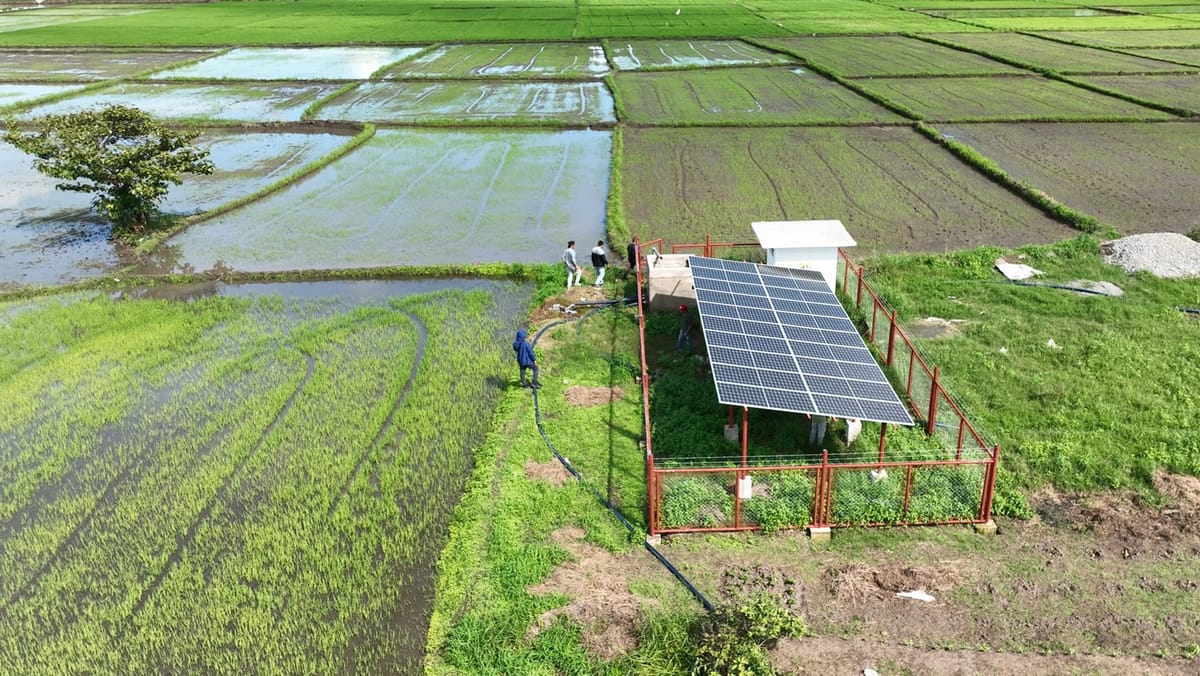
Solar pump irrigation systems reviving failed stations along major river basins, says NIA chief

Solar pump irrigation systems reviving failed stations along major river basins, says NIA chief
Share

The situation, in brief

The National Irrigation Administration (NIA) is converting failed diesel and electricity-driven pumping stations along major river basins into solar pump irrigation systems, with results so far proving positive, its administrator said Saturday. In an interview on DZRH News program Special on…

The National Irrigation Administration (NIA) is converting failed diesel and electricity-driven pumping stations along major river basins into solar pump irrigation systems, with results so far proving positive, its administrator said Saturday.

In an interview on DZRH News program Special on Saturday on June 13, NIA Administrator Eduardo Guillen said the old pumping stations collapsed primarily because high diesel and electricity costs made them impossible for farmers to maintain.

“Ang dahilan po siyempre diesel-driven iyan at pinapatakbo po iyan ng kuryente. Napakamahal po ng diesel at kamahal din ng kuryente, so hindi ho kayang i-maintain ng ating mga farmers,” Guillen said.

He said the shift to solar pump irrigation systems is part of a broader focus on repair and restoration rather than new construction, a directive from President Ferdinand Marcos Jr. that Guillen said is far more cost-efficient.

Guillen said the repair and restoration approach was prioritized because rehabilitating existing infrastructure costs significantly less than building new facilities, allowing NIA to extend irrigation services to more areas with limited funding.

He said the solar pump irrigation rollout is being funded by the national government, and credited Marcos for treating food security as a genuine budget priority—not just a policy statement.

“Diyan ako bilib kay Presidente eh, priority niya po kasi itong food security. Yung kasabihan ho na ‘put your money where your mouth is’ ay ganun po talaga siya,” Guillen said.

The shift to solar irrigation is part of NIA’s larger climate adaptation program, which also includes desilting operations, brush dam construction, and a shift in cropping calendars to cushion the impact of El Niño on irrigated farmlands nationwide.


More on Nation

See all
Marcos’ net satisfaction ratings drops to ‘poor’ in latest SWS survey
Nation

Marcos’ net satisfaction ratings drops to ‘poor’ in latest SWS survey

President Ferdinand Marcos Jr.’s net satisfaction rating fell to “poor” from “neutral” in the third-quarter survey of the Social Weather Stations (SWS). Marcos’ net satisfaction rating dropped to -11 in September 2026 from -7 in June, according to the survey. The SWS said 35% of adult Filipinos…

Magellan may have reached the Philippines because of El Niño — without knowing it: study
Nation

Magellan may have reached the Philippines because of El Niño — without knowing it: study

Portuguese explorer Ferdinand Magellan may have reached the Philippines in 1521 because of El Niño, without him or his fellow voyagers knowing it. A 2021 study by Dr. Scott Fitzpatrick of North Carolina State University and Dr. Richard Callaghan of the University of Calgary examined Magellan’s…

More than one teaspoon of salt increases risk of heart diseases, stroke — WHO
Nation

More than one teaspoon of salt increases risk of heart diseases, stroke — WHO

Cardiovascular diseases remain the world’s leading cause of death—not only in the Philippines—the World Health Organization (WHO) said. According to the WHO, cardiovascular diseases claim an estimated 17.9 million lives each year, with excessive salt intake identified as one of the key…

‘Very strong’ El Niño may emerge by October, PAGASA warns: ‘This should be taken seriously’
Nation

‘Very strong’ El Niño may emerge by October, PAGASA warns: ‘This should be taken seriously’

Reduced rainfall may be experienced in the coming months as the El Niño phenomenon continues to rapidly strengthen and may persist until the first half of 2027, according to the PAGASA. Ana Solis, chief of PAGASA’s Climate Impact Assessment and Prediction Section, said warming ocean temperatures…

Free newsletter

The Morning SitRep

The day’s most important stories in the Philippines and the world, in one five-minute read. Delivered at 6 AM, Monday to Saturday.

Breaking alerts Special reports first No spam
Check your inbox — we’ve sent a link to confirm your subscription.Something went wrong. Please try again in a moment. By subscribing you agree to TSR’s privacy policy.